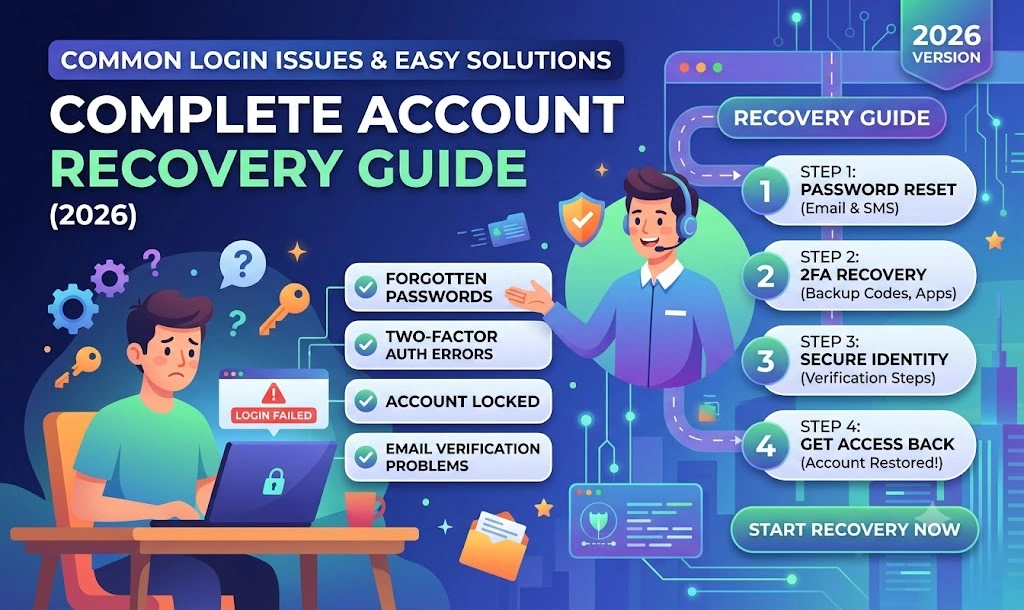
Logging in to an online account should be a simple process, but users occasionally encounter problems that prevent them from accessing their accounts. Whether you're signing in to an online service, educational platform, e-commerce website, banking portal, or another digital account, login issues can interrupt your work and create unnecessary frustration.
Fortunately, most login problems have straightforward solutions. In many cases, the issue is caused by something as simple as an incorrect password, an expired session, a browser setting, or a temporary network problem.
This guide explains the most common reasons login attempts fail and provides practical, step-by-step solutions to help you regain access to your account. It also includes advice on keeping your account secure and reducing the chances of experiencing login problems in the future. https://radheexchex.com/
Why Login Problems Happen
Understanding why login failures occur is the first step toward resolving them quickly. Login systems use several security checks to verify your identity, and even a small issue can prevent successful authentication.
Below are the most common causes.https://radheexchex.com/
Incorrect Username or Email Address
One of the simplest and most frequent reasons users cannot log in is entering the wrong username or email address.
This can happen when:
The email address contains a typing mistake.
The wrong account is being used.
Extra spaces are accidentally added before or after the username.
Automatic form filling inserts outdated information.
How to Fix It
Carefully check your email address or username.
Remove any unnecessary spaces.
Confirm that you're using the correct account.
Avoid copying and pasting credentials from unreliable sources.
Taking a few extra seconds to verify your login details can often solve the problem immediately.
Incorrect Password
Passwords are case-sensitive, meaning uppercase and lowercase letters are treated differently.
Common password mistakes include:
Typing errors
Caps Lock enabled
Incorrect keyboard language
Recently changed passwords
Using old saved passwords
How to Fix It
Type the password manually instead of relying on autofill.
Ensure Caps Lock is turned off.
Check that your keyboard layout matches your usual language.
If you recently changed your password, use the new one.
If necessary, begin the password reset process.
Expired Login Session
Many websites automatically log users out after a period of inactivity to protect account security.
When this happens, you may see messages such as:
Session Expired
Authentication Failed
Please Log In Again
Solution
Simply refresh the page and sign in again.
If the message continues appearing:
Close all browser tabs.
Open a new browser window.
Log in from the official website.
Browser Cache and Cookies
Browsers save temporary files to improve loading speed. However, outdated cache files and cookies can interfere with the login process.
Symptoms include:
Login page continuously refreshing
Infinite loading
Login button not responding
Website displaying old information
Solution
Clear your browser's:
Cache
Cookies
Site data
Restart the browser and try again.
Most modern browsers include this option under Privacy & Security settings.
Internet Connection Problems
A weak or unstable internet connection may interrupt communication between your device and the server.
Signs include:
Slow page loading
Verification timeouts
Connection errors
Login requests failing repeatedly
Solution
Switch between Wi-Fi and mobile data if available.
Restart your router.
Test another website to confirm internet access.
Disable VPN services temporarily if they affect connectivity.
A stable internet connection often resolves these issues without further troubleshooting.
Account Security Measures
Many services automatically protect accounts by blocking suspicious login attempts.
Examples include:
Too many incorrect passwords
Login from a new location
Login from an unfamiliar device
Unusual activity detected
These security measures help prevent unauthorized access but may temporarily restrict legitimate users. https://radheexchex.com/
Solution
Follow any on-screen verification steps, such as:
Email confirmation
Verification code (OTP)
Security questions
Identity verification
How to Troubleshoot Common Login Issues
If you're unable to access your account, work through the following troubleshooting steps one at a time.
In many cases, the problem is resolved before you need additional assistance.
Step 1: Verify Your Login Credentials
Before assuming there's a technical issue, carefully review the information you're entering.
Check that:
Your username or email is correct.
Your password is accurate.
Caps Lock is disabled.
There are no extra spaces.
Your keyboard language is correct.
Simple typing mistakes remain one of the leading causes of failed login attempts.
Step 2: Refresh the Login Page
Temporary server communication issues sometimes prevent successful authentication.
Refreshing the page can establish a new connection.
If refreshing doesn't help:
Close the browser completely.
Reopen it.
Visit the login page again.
Step 3: Clear Browser Cache and Cookies
Stored browser data may conflict with updated website settings.
To clear browsing data:
Open browser settings.
Navigate to Privacy & Security.
Select Clear Browsing Data.
Choose Cookies and Cached Images & Files.
Restart the browser.
This process often fixes repeated login loops and loading issues.
Step 4: Try a Different Browser
Browser extensions or outdated versions occasionally interfere with secure login pages.
If you're experiencing issues:
Try Chrome
Try Edge
Try Firefox
Try Safari
If login works in another browser, the issue is likely browser-specific.
Step 5: Disable Browser Extensions Temporarily
Some extensions-including ad blockers, script blockers, and privacy tools—can interfere with authentication systems.
Temporarily disable extensions and attempt to log in again.
If successful, re-enable them one at a time to identify the cause.
Step 6: Restart Your Device
Although it sounds simple, restarting your computer or smartphone clears temporary processes that may be causing conflicts.
A restart can resolve:
Frozen login pages
App crashes
Browser glitches
Memory-related issues
Step 7: Check Your Internet Connection
Run a quick connectivity check by opening another trusted website.
If other websites also fail to load:
Restart your modem or router.
Reconnect to Wi-Fi.
Switch to another network if available.
Stable internet access is essential for successful authentication.
Step 8: Update Your Browser or Mobile App
Older software versions may not support the latest security standards.
Make sure you are using:
The latest browser version.
The latest mobile app version.
The newest operating system updates.
Software updates often include bug fixes that improve login reliability.
Step 9: Check for Temporary Service Outages
Occasionally, login issues are caused by maintenance or unexpected server outages rather than problems on your device.
If multiple users report similar issues, the service provider may already be working on a fix.
In these situations:
Wait a few minutes before trying again.
Avoid repeated login attempts, which may temporarily lock your account.
Check official status updates if the provider offers them.
Step 10: Contact Customer Support if Needed
If none of the above steps resolve the problem, contact the service provider's official support team.
When reaching out, include helpful information such as:
The error message you received.
The time the issue occurred.
Your device type.
Your browser or operating system.
Screenshots (if appropriate and without exposing sensitive information).
Providing accurate details can help the support team diagnose and resolve the issue more efficiently.
Step-by-Step Password Reset Guide
Forgetting a password is one of the most common reasons users cannot access their online accounts. Fortunately, most online services provide a secure password reset process that allows users to regain access after verifying their identity.
Resetting your password should always be done through the service's official website or mobile application. Avoid clicking password reset links sent from unknown emails or messages, as these could be phishing attempts.
When Should You Reset Your Password?
You should reset your password if:
You have forgotten your current password.
Your password is no longer accepted despite entering it correctly.
You believe someone else may know your password.
You receive a notification about suspicious login activity.
The service recommends changing your password after a security update.
Resetting your password regularly can also improve your account's overall security.
How to Reset Your Password
Although each platform has a slightly different process, the steps are generally similar.
Step 1: Visit the Official Login Page
Go to the official login page of the service where your account is registered.
Select the Forgot Password or Reset Password option.
Step 2: Enter Your Registered Information
You may be asked to provide one of the following:
Registered email address
Username
Mobile number
Ensure the information matches what you used when creating your account.
Step 3: Complete Identity Verification
To protect your account, the platform may verify your identity using:
Email verification
SMS verification code (OTP)
Security questions
Authenticator application
Two-factor authentication
Only continue if you initiated the password reset yourself.
Step 4: Create a New Password
Choose a password that is both secure and easy for you to remember.
A strong password should include:
Uppercase letters
Lowercase letters
Numbers
Special characters
At least 12 characters
Example format:
Example: MySecure@2026!Account
Avoid using personal information such as birthdays, names, or simple number sequences.
Step 5: Log In Using Your New Password
Once your password has been successfully updated:
Return to the login page.
Enter your username or email.
Use the newly created password.
Confirm that you can access your account successfully.
If login still fails, verify that the password reset was completed before attempting another reset.
Creating a Strong Password
A secure password helps protect your account from unauthorized access.
Best Practices
Use at least 12–16 characters.
Mix uppercase and lowercase letters.
Include numbers and symbols.
Use a unique password for every account.
Consider using a trusted password manager to generate and store strong passwords securely.
Avoid
"12345678"
"password"
Your name
Birth dates
Phone numbers
Common words
Strong passwords are your first line of defense against unauthorized access.
Password Security Tips
Maintaining good password hygiene is just as important as creating a strong password.
Recommended Practices
Change passwords if you suspect unauthorized access.
Never share passwords with anyone.
Do not store passwords in plain text.
Avoid logging in on public or shared devices.
Log out after using public computers.
Enable two-factor authentication (2FA) whenever available.
These habits can significantly reduce the risk of account compromise.
How to Recover Your Account
Sometimes, a password reset isn't enough. If you no longer have access to your registered email address or phone number, you'll need to follow the account recovery process.
Account recovery is designed to help legitimate users regain access while preventing unauthorized individuals from taking over an account.
Common Reasons for Account Recovery
You may need account recovery if:
You forgot both your username and password.
Your registered email address is no longer accessible.
Your mobile number has changed.
Your account has been temporarily locked.
Suspicious activity has triggered additional verification.
Identity Verification During Recovery
Most online services ask users to verify their identity before restoring account access.
Verification methods may include:
Registered email confirmation
Mobile verification code
Previous login information
Security questions
Government-issued identification (only when required by the service)
Provide accurate information to help the support team verify ownership.
Recovering a Locked Account
Accounts may be temporarily locked after repeated unsuccessful login attempts.
This security feature helps prevent brute-force attacks.
If your account is locked:
Wait for the specified lockout period.
Avoid repeated login attempts.
Reset your password if necessary.
Follow any additional verification steps provided.
In many cases, accounts are automatically unlocked after a short waiting period.
When to Contact Customer Support
If automated recovery methods do not work, contact the service provider's official support team.
When requesting assistance, include:
Registered email address
Username (if known)
Description of the issue
Approximate time the problem started
Screenshots of any error messages (excluding sensitive information)
Providing complete and accurate details can speed up the recovery process.
Common Verification Code (OTP) Problems
Many online services use One-Time Passwords (OTPs) as an additional layer of security.
While OTP verification improves account protection, users occasionally experience issues receiving or using verification codes.
OTP Not Received
One of the most common problems is not receiving the verification code.
Possible reasons include:
Weak mobile network signal
Delayed SMS delivery
Incorrect phone number
Full SMS inbox
Temporary service delays
Solutions
Wait a few minutes before requesting another code.
Check your mobile signal.
Restart your phone.
Verify that your registered phone number is correct.
Avoid requesting multiple OTPs in quick succession, as this may invalidate earlier codes.
Verification Email Not Received
Some services send verification links instead of SMS codes.
If you do not receive the email:
Check your Spam or Junk folder.
Search for the sender's address.
Ensure your email inbox is not full.
Confirm that your registered email address is correct.
If necessary, request a new verification email.
Expired Verification Code
Verification codes usually expire after a short period for security reasons.
If you attempt to use an expired code:
Request a new verification code.
Enter it immediately.
Avoid using older codes that are no longer valid.
Incorrect Verification Code
Entering the wrong code repeatedly may temporarily block further verification attempts.
Before entering the code:
Double-check each digit.
Ensure you're using the latest code received.
Do not copy older messages.
Too Many Verification Attempts
Some platforms limit the number of verification requests within a certain time frame.
If you exceed the limit:
Wait until the restriction expires.
Avoid repeatedly clicking "Resend Code."
Try again later using a stable internet connection.
Patience often resolves this issue without further action.
Tips to Prevent Future Login Problems
Following a few simple habits can reduce the likelihood of future login issues.
Keep Your Contact Information Updated
Always maintain:
Current email address
Active mobile number
Updated recovery options
This makes password recovery significantly easier.
Enable Two-Factor Authentication (2FA)
Two-factor authentication adds an extra layer of security by requiring a second verification step during login.
Benefits include:
Better protection against unauthorized access.
Faster detection of suspicious login attempts.
Improved account security.
Avoid Phishing Attempts
Never enter your login credentials after clicking links from:
Unknown emails
Suspicious text messages
Unverified social media messages
Instead, type the official website address directly into your browser.
Keep Software Updated
Regularly update:
Web browsers
Mobile apps
Operating systems
Security software
Updates often include fixes for login bugs and newly discovered security vulnerabilities.
Summary
Password resets, account recovery, and verification issues are among the most common reasons users struggle to access online accounts. Fortunately, most of these problems can be resolved by following a structured recovery process, verifying account information, and using strong security practices.
Understanding how password recovery and verification systems work can save time, reduce frustration, and help keep your account protected against unauthorized access.
Browser and Mobile App Troubleshooting
Even after verifying your login credentials and resetting your password, you may still experience login issues caused by your browser, mobile app, or device settings. Fortunately, these problems are often easy to resolve with a few simple checks.
Login Problems on Google Chrome
Google Chrome is one of the most widely used web browsers, but outdated settings or corrupted browsing data can sometimes interfere with secure login pages.
Common Symptoms
Login page keeps refreshing.
Website loads but the sign-in button doesn't respond.
Endless loading after clicking "Log In."
Browser displays outdated content.
Solutions
Update Chrome to the latest version.
Clear browsing data, including cache and cookies.
Disable browser extensions temporarily.
Restart Chrome after clearing data.
Try using Incognito Mode to determine whether extensions are causing the issue.
If login works in Incognito Mode, one of your browser extensions is likely interfering with the website.
Login Problems on Microsoft Edge
Microsoft Edge shares many features with Chrome, so similar troubleshooting steps often apply.
Recommended Steps
Install the latest browser updates.
Clear cookies and cached files.
Disable unnecessary extensions.
Restart your browser.
Check whether JavaScript is enabled.
Keeping your browser updated improves both security and compatibility with modern websites.
Login Problems on Mozilla Firefox
Firefox offers strong privacy features, but certain security settings or add-ons may occasionally interfere with authentication.
Try the Following
Update Firefox.
Disable privacy-related extensions temporarily.
Clear browsing history and cache.
Verify that cookies are enabled.
Restart Firefox.
Testing login in a private browsing window can also help determine whether stored browser data is causing the problem.
Login Problems on Safari
Mac and iPhone users may occasionally experience login issues related to Safari's privacy settings.
Troubleshooting Tips
Update Safari through your operating system updates.
Clear website data.
Disable content blockers temporarily.
Ensure cookies are allowed for trusted websites.
Restart your device after making changes.
Mobile App Login Problems
Many online services also provide mobile applications for Android and iOS devices. Login problems within apps are often related to outdated software, corrupted app data, or network issues.
Common Issues
App crashes during login.
Login screen freezes.
Authentication error appears repeatedly.
Verification code is accepted but login doesn't complete.
Solutions
Update the app through the official app store.
Restart your smartphone.
Force close and reopen the application.
Clear the app cache (if supported).
Reinstall the application if necessary.
Check that your operating system is up to date.
Reinstalling the app can often resolve issues caused by corrupted local files.
Best Practices to Keep Your Account Secure
Preventing login problems isn't just about remembering your password. Good security habits protect your account from unauthorized access and reduce the likelihood of future issues.
Enable Two-Factor Authentication (2FA)
Two-factor authentication adds an extra layer of protection by requiring a second verification step after entering your password.
Benefits include:
Enhanced account security.
Protection against stolen passwords.
Alerts about suspicious login attempts.
Whenever available, enable 2FA using an authenticator app or another trusted verification method.
Use Strong, Unique Passwords
Avoid reusing the same password across multiple websites.
Instead:
Create a unique password for every account.
Use a trusted password manager if needed.
Change passwords after any suspected security incident.
Unique passwords help prevent one compromised account from affecting others.
Beware of Phishing Attempts
Cybercriminals often create fake login pages designed to steal usernames and passwords.
Warning signs include:
Unexpected emails asking you to log in.
Misspelled website addresses.
Poor grammar or unusual formatting.
Requests for personal information through email.
Always access websites by typing the official address into your browser instead of following links from unsolicited messages.
Keep Your Devices Updated
Software updates often include important security patches.
Regularly update:
Operating system
Browser
Mobile apps
Antivirus software
Running the latest versions helps protect your account from known vulnerabilities.
Monitor Your Account Activity
Many online services allow users to review recent login activity.
If available, check for:
Unknown devices.
Unrecognized locations.
Unexpected login times.
If anything looks suspicious, change your password immediately and contact the service provider's support team.
Frequently Asked Questions (FAQs)
Why can't I log in even though my password is correct?
This could be caused by an expired session, browser cache, network issues, two-factor authentication, or temporary service maintenance. Verify your credentials, clear your browser cache, and try again.https://radheexchex.com/
How do I know if my account is locked?
Many services display a notification if an account has been temporarily locked due to multiple unsuccessful login attempts. Wait for the specified period or follow the recovery instructions provided.https://radheexchex.com/
What should I do if I forget my password?
Use the official Forgot Password option on the login page. Follow the verification process and create a new, strong password.https://radheexchex.com/
Why am I not receiving the verification code?
Possible reasons include network delays, incorrect contact information, or temporary service issues. Wait a few minutes, verify your registered email or phone number, and request a new code if needed.https://radheexchex.com/
Is it safe to save passwords in my browser?
Modern browsers offer encrypted password storage, but many users prefer dedicated password managers for additional security features and easier password management.
Should I change my password regularly?
While frequent changes are not always necessary, you should change your password immediately if you suspect unauthorized access or if the service provider recommends it after a security incident.https://radheexchex.com/
What causes repeated login failures?
Repeated failures may result from incorrect credentials, outdated browser data, network interruptions, expired sessions, or temporary account restrictions.https://radheexchex.com/
Can browser extensions interfere with login?
Yes. Privacy tools, ad blockers, script blockers, and security extensions can sometimes prevent login pages from functioning correctly. Temporarily disabling extensions can help identify the issue.https://radheexchex.com/
Why does my session expire?
Sessions automatically expire after periods of inactivity to help protect your account from unauthorized access, especially on shared devices.
What should I do if none of the troubleshooting steps work?
Contact the service provider's official support team. Provide details such as the error message, your browser or device, and the steps you've already taken to resolve the issue.
Final Thoughts
Login problems can happen for many reasons, but they are usually temporary and can often be resolved with a systematic approach. Checking your login credentials, clearing browser data, updating your software, and following official password recovery procedures are among the most effective ways to regain access to your account.
Good security habits are equally important. Using strong passwords, enabling two-factor authentication, keeping your devices updated, and staying alert to phishing attempts all help protect your personal information and reduce the likelihood of future login issues.
If you've tried all the recommended troubleshooting steps and still can't access your account, don't continue making repeated login attempts. Instead, contact the service provider through its official support channels and provide accurate information about the issue. This will help the support team verify your identity and assist you more efficiently.
By understanding the most common causes of login failures and following the practical guidance in this article, you can resolve many account access problems quickly while maintaining strong account security.https://radheexchex.com/